
Municipal Planning and Zoning
Introduction
Zoning 101
Who is Responsible for Zoning?
Does the Right to Farm Act (RTFA) Preempt Local Zoning Regulations?
The Zoning Process
Compliance with Zoning and Zoning Violations
Summary
Must Read Articles
Agritourism Zoning Cases
Resources and Support
Disclaimers
References

Key Take Aways
Zoning is defined as local government laws that regulate the use of property and the development of buildings on the property. The intent is to prevent one landowner from using their property in a way that unreasonably interferes with another landowner’s use and enjoyment of property.
Michigan’s individual cities, villages, counties, and townships zone the land and enforce the regulations, though the state creates zoning regulations.
Zoning regulations are developed at the local level with input from residents, staff, examples from other townships, consultants and sometimes experts in the field. The proposed rules are notified in the newspaper and discussed through public meetings before being voted on for approval or denial by local zoning boards.
Michigan’s Right to Farm Act exempts some local zoning regulations, but it does not completely preempt zoning regulations in every single situation. Your farm may still have to comply with other regulations.
Before starting an agritourism activity or any new construction project in Michigan, make sure to research local zoning laws and consult with experts in advance to ensure compliance with local regulations. Find out what is allowed and if there are any restrictions. Understanding zoning regulations can save you valuable time and money!
Activities like events and retail food can shift a farm into a commercial category. Be aware that when your business changes, there may be new rules which must be met to avoid fines and work stoppages.
Zoning ordinances can be changed – but it takes time. The local government has the right to make zoning restrictions, but it’s possible to propose changes that allow for agritourism. It will take patience and time. Talk to experts who can guide and support you through this process.
INTRODUCTION
As farmers seek to sustain their businesses long into the future, some consider expanding or changing from a more traditional agricultural operation (growing farm products and selling them to a processor) to a direct marketing model with on-farm sales and activities for the public to enjoy. Direct sales can lead to higher profits and can help diversify revenue streams. On-farm activities can provide great learning opportunities for the public and a chance to get to know the people growing their food. All of these things can help create a more sustainable and successful farm operation.
To diversify your farm, you may consider adding a roadside stand, farm market, bakery, or offering activities like u-pick, tours, classes, corn mazes, festivals, petting zoos, and more. When you do this, you need to be sure that your local zoning ordinance allows for these specific land uses. If the public will be coming onto your property, this changes how your business is viewed by your local township and certain regulations may apply. There are exceptions, as farms receive protection from some of these regulations through Michigan’s Right to Farm Act, but this does not apply in all cases. Some activities may not automatically be allowed, even if they occur on your farm. Understanding your zoning early can help avoid delays, fines, or being forced to stop an activity after investing time and money.
The best thing you can do is develop a clear business plan, educate yourself on the local zoning ordinances in your community and do your research BEFORE breaking ground or spending money on a new aspect of your business. Reach out to your local zoning department early and develop a good working relationship with them. This can be easier said than done, but in the end, a good working relationship with your township officials will likely be an asset that will work in your favor in the long run.
ZONING 101 IN MICHIGAN
Definition
Zoning refers to local government laws that regulate the use of property and the development of buildings on the property. The intent is to prevent one landowner from using their property in a way that unreasonably interferes with another landowner’s use and enjoyment of property. These laws govern land use and ensure that the structures built align with the community’s intended purposes and stay within the character of the surrounding area.
Zoning Framework
Zoning laws are established by local municipalities like cities, townships, villages, or counties; not by the state. In Michigan, zoning authority comes from the Michigan Zoning Enabling Act (MZEA), which allows local governments to create and enforce zoning ordinances. In some cases, county government adopts a zoning ordinance, which applies to townships within the county that do not have a zoning ordinance of their own.
Zoning Ordinances and Master Plans
Each local government adopts a zoning ordinance (the actual rules) and often a master plan (a long-term vision for land use). The zoning ordinance specifies what is allowed, what requires approval, and what is prohibited – the framework for you to be able to operate.
The master plan is the policy document upon which zoning regulations are based. Many ordinances focus on “authentic” accessory uses that support and promote working farms to avoid the commercial development of tourist or recreational facilities incompatible with rural character.
Zoning in a “farm friendly” environment might include:
- Adaptable Zoning: Flexible zoning laws are essential for fostering agritourism while ensuring critical farmland preservation and community vitality.
- Address Conflicting Interests: Balance agricultural operations with tourism expansion to minimize conflicts with other land uses, without over-regulating.
- Preservation vs. Development: Understand the need for diversification and a need to generate more farm income in addition to the need to conserve rural landscapes.
- Safety Regulations: For visitor protection and promoting responsible agritourism operational standards.
Zoning Districts.
A typical zoning ordinance divides property within the local township government into separate districts. Each district specifies different uses allowed and the development standards that apply to new construction. For rural local government jurisdictions, there is typically an “Agricultural” or a “Farm/Forest” zoning district where agriculture is allowed as a principal or main use of the property. Often, agriculture/farming is also allowed as a principal or main use in a “Rural Residential” district.
When construction is proposed, a zoning ordinance will require you, as the property owner, to apply for a permit. The permit authorizes the use of the property and building placement and size in conformance with the standards of the zoning district. This applies to vacant land or an existing building with a proposed renovation or addition.
Types of Zoning Districts in Michigan
Zoning laws in Michigan generally fall into specific categories or districts, each with unique regulations. These include:
- Residential Zoning: This district covers areas intended primarily for residential use. Zoning regulations in residential areas often address things like the minimum lot size, setbacks (distance between the structure and property lines), and the height of buildings. Single-family homes, multi-family buildings, and townhomes may be allowed in these districts, but regulations will vary.
- Commercial Zoning: Commercial zoning covers properties used for business activities such as retail, office space, and restaurants. These areas have specific regulations about signage, parking requirements, building size, and the type of businesses that can operate in these districts.
- Industrial Zoning: Industrial zoning applies to areas intended for manufacturing, distribution centers, and other industrial activities. This zoning typically has stricter regulations regarding noise, pollution control, and safety measures.
- Agricultural Zoning: Areas designated for farming, forestry, or other agricultural uses are governed by agricultural zoning laws. These districts typically allow for the construction of barns, silos, and other farming-related structures.
- Mixed-Use Zoning: In some areas, zoning laws may allow for a blend of residential, commercial, and sometimes even light industrial uses within the same district. These areas are becoming increasingly popular in urban development.
- Special Zoning: Some areas may be designated for specific purposes, such as historical preservation or environmental protection, and come with unique restrictions on construction and renovation activities.
How Zoning Affects Your Construction Project
Zoning laws will determine if your proposed construction or renovation is allowed in your area and will also establish:
- Building Height: Zoning laws may specify the maximum height and size of structures.
- Setbacks and Lot Coverage: Setbacks refer to the minimum distance between a building and the property line, while lot coverage limits the percentage of a lot that can be occupied by buildings. Zoning laws ensure that structures have adequate space around them for privacy, light, air, and emergency access.
- Parking Requirements: Many zoning laws impose parking space requirements (layout and capacity) based on the type and size of the building being constructed.
- Permitted Uses: Zoning laws will specify what kinds of structures can be built and what activities can take place on a property. If your use is not included or allowed, you may need to request a variance or special use permit.
- Other Zoning Standards that can affect agritourism include traffic flow, restrooms, ADA accessibility, signage, and hours of operation.
Sources: CMS Specialists, Neumann, B. & Michigan State University Extension, Stolzenburg, N. & Onondaga County Planning
Special Land Use Permits
A given zoning district will list uses allowed by right (permitted uses) and uses allowed by special land use permit (special or conditional uses, which require a review by the local planning commission or other review board in order to determine if certain conditions are met that make it allowable). If “Agriculture” is listed as a special land use, that means agriculture is only allowed if certain special standards can be met.
Special events, such as festivals, weddings, concerts, or craft art shows, often require special land use permits. Some ordinances may allow a certain number of special events of a limited size by right but require special land use or special event permits for larger or more frequent events. The ordinance may also include performance or operational standards addressing minimum parcel size, amplified sound, outdoor lighting, and the maximum number of guests allowed at events.
Examples of agritourism enterprises that often require special land use permits include:
- Bed-and-breakfasts
- Tasting rooms
- Eating/drinking establishments (even if temporary)
- Events held on farmland
- Classes on topics such as food preparation, fiber arts, general cooking, and cheese making
Some agritourism activities fall into a “gray area” where some may question whether the activity is truly agriculturally based. The ordinance will usually include a definition of agritourism and a “working farm” to help determine this.
Key Land Use Questions to Consider
If considering an agritourism activity, do your research. Do your local zoning laws allow for agritourism structures and activities? Just being zoned for agriculture may not be enough. Your local and state zoning laws may be very specific.
- Is the use of your land for agritourism activities permissible? Have you talked to your local planning board or commission?
- What renovations will be needed on the property, if any?
- Have you talked to your neighbors about your plans? Are they receptive and supportive, or irritated? Do you have a plan to overcome negative feedback?
- Is there adequate parking for large groups? Do you have turn-around areas for school buses or other large vehicles
- Are there land, water, or wildlife issues that might affect your plans?
Source: A Guide to Successful Agritourism Enterprises, University of Vermont Extension
WHO IS RESPONSIBLE FOR ZONING?
Role of Local Governments
While the state creates zoning regulations, Michigan’s individual cities, villages, counties, and townships zone the land. Some communities also use agricultural committees to advise their staff and board on agricultural matters. The geography, growing regions, and population areas vary widely throughout the state. There is room for interpretation and different localities apply the regulations as they understand them, perhaps slightly differently. Some also define agritourism, the best they can, with the absence of an official legal definition in Michigan.
Understanding Local Control
Local governments have control over land use. Local officials are tasked with the role of enforcement – overseeing the implementation of state and local regulations through the process of issuing permits. It is their role to preserve the integrity of zoning regulations and maintain focus on the approved plans for the community.
Local governments are often “in the middle” as they work to serve the best interests of farmers and neighboring residents. Take the typical farm barn for instance, built to store things or animals, not people. If a farm wishes to use it for weddings, a wedding is not complete without guests, traffic, lights, parking, music, and noise. Will it be used for other purposes when not in use for weddings? Converting a barn to “public assembly use” also requires that building codes be met to ensure public health and safety.
DOES THE RIGHT TO FARM ACT (RTFA) PREEMPT LOCAL ZONING REGULATIONS?
Michigan’s Right to Farm Act and 1999 Amendment
The Michigan Right to Farm Act is a state law designed to protect farms and farm operations from nuisance lawsuits and certain local regulations when they are operating according to accepted agricultural practices. The law was enacted in 1981 as Public Act 93.
The RTFA provides:
- Protection from nuisance claims for qualifying farms
- Statewide agricultural standards through GAAMPs
- Preemption of some local ordinances that conflict with the Act
- Annual review and updating of GAAMPs by the state
- Complaint investigation and farm assessments by the Michigan Department of Agriculture and Rural Development (MDARD)
In 1999, the Right to Farm Act was amended which gave farmers a uniform statewide standard. Local governments are legally prohibited from enacting or enforcing zoning ordinances, regulations, or resolutions that conflict with the Act or the state’s Generally Accepted Agricultural Management Practices (GAAMPS).
“Beginning June 1, 2000, except as otherwise provided in this section, it is the express legislative intent that this act preempt any local ordinance, regulation, or resolution that purports to extend or revise in any manner the provisions of this act or generally accepted agricultural and management practices developed under this act. Except as otherwise provided in this section, a local unit of government shall not enact, maintain, or enforce an ordinance, regulation, or resolution that conflicts in any manner with this act or generally accepted agricultural and management practices developed under this act.” MICHIGAN RIGHT TO FARM ACT 93 of 1981, 286.474, Sect. 4 (6), Michigan Legislature
Because of this amendment, the RTFA preempts some local zoning regulations, but it does not completely preempt zoning regulations in every single situation. Your farm may still have to comply with other regulations. For example, according to the Farm Market GAAMPs, a minimum of one roadside sign is allowable for your farm; however, this sign (and any additional signs, if permitted) may be subject to other local ordinance requirements (e.g., setbacks, lighting, height, and size). Also, local regulations still apply for vehicle access and egress, building setbacks, and parking. A safe rule of thumb if that if an item is not addressed in GAAMPs, then local zoning will apply.
Are there specific requirements to be able to receive a preemption under RTFA?
Yes, as a starting point, preemption under RTFA requires that the land use is a) on a farm, b) producing a farm product, c) engaged in commercial production and d) is complying with the Generally Accepted Agricultural and Management Practices (GAAMPs).
What type of land use is protected under RTFA?
Production of Farm Products
The Act protects the commercial production of farm products and the marketing and sales of farm products at farm markets.
What types of land use may not be protected?
Production and Sales of Non-farm Products
RTFA protection may not extend to sales of non-farm products (e.g., hats, t-shirts, jewelry, etc.), on-site processing of farm products (e.g., baking pies, brewing hard cider, etc.) or other on-farm activities (e.g., wedding or event barns, bed and breakfast/lodging, restaurants, glamping, etc.). A GAAMPs-conformant farm market operation may still be subject to other local, state and/or federal regulations.
Agritourism
As noted in the Appendix of the Farm Market GAAMPs, Agritourism currently has no legal definition or recognition in Michigan law. Activities commonly identified as, and/or associated with, agritourism may or may not comply with GAAMPs. These activities must be assessed on a case-by-case basis and may be subject to additional local, state and/or federal regulations.
Source: Appendix, Farm Market GAAMPs (2025)
How do you determine if the RTFA preemption applies in my specific case?
In general, if the activity is a commercial agricultural activity, preemption should apply in most cases. That doesn’t mean that some regulations may still apply, such as building code requirements.
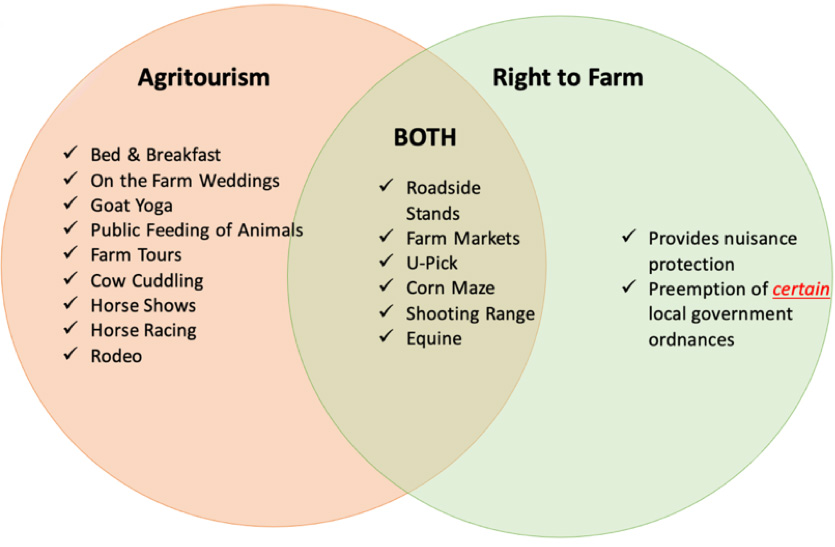
This Venn diagram from Michigan Farm Bureau illustrates some of the differences in RTFA preemption. The land uses noted in the green Right to Farm section generally receive nuisance protection and preemption from certain local government ordinances, whereas the land uses listed in the orange section on the left do not.
Need help determining if the RTFA preemption applies in a specific situation?
It can be confusing to determine whether the RTFA preemption applies in your specific situation. Please don’t hesitate to reach out to the individuals below with your questions. They are here to help!
Helpful contacts:
Ryan Coffey Hoag, Extension Educator
Land Use, Government & Community Vitality
MSU Extension
(231) 924-9677
coffeyry@msu.edu
Erica Rogers, Right to Farm Program Manager
Bureau of Environment and Sustainability
(877) 632-1783
MDARD-RTF@Michigan.gov
Matt Kapp, Government Relations Specialist
Michigan Farm Bureau
(517) 679-5338
mkapp@michfb.com
Janice Benson, Executive Director
Michigan Agritourism
(616) 952-1151
info@michiganfarmfun.com
THE ZONING PROCESS
How Zoning Ordinances are Developed
Ideas for Changes. Proposals for zoning code amendments may come from a revision committee, or another group within the municipality. Sometimes, proposals for amendments are suggested by staff members, residents, developers or business owners.
Drafting the Code. Developers, attorneys, and planning consultants sometimes provide their expertise in crafting new zoning codes or changes behind the scenes. On ag-based changes, farmers will help with providing language that fits the industry. The reality is that municipalities are often short on staff and resources and will allow “outside help” in developing the codes or code changes. However, municipal staff also draft the codes whenever possible. The Planning Commission members’ role is to review, lead working sessions, discuss and present drafts through public meetings/hearings, and recommend adoption to the Board. The Board members’ role is to adopt the code.
Input from Farmers. Creating ag-based zoning requires careful planning and collaboration. It is important to provide your input, experience, and expertise with agritourism early in the planning process. To do that, you need a relationship with your local zoning board as a concerned citizen and be willing to work with them.
Length of the Process. The time and effort that goes into any possible code amendment is often lengthy and there is no guarantee of changes being adopted.
Government Review. The role of municipal staff and officials is to consider the ideas and proposals, decide if they have merit, and evaluate them for consistency with the comprehensive plan and needs of the community. If they are worthy of further consideration, they are presented at public meetings.
Public Meetings. Proposed amendments are not adopted until the public has been given opportunities to comment at public meetings or hearings. A variety of opinions and concerns are often expressed at these meetings
If an agricultural zoning (or other issue of interest to you) is proposed in your district, be informed and involved and also encourage other like-minded residents to participate: more voices increase the possibility of change.
Attend meetings, and review agendas and any supporting documents that are being discussed in advance. Local districts want input from their residents. Ask for copies of proposed ordinances that could impact your farm or your business in advance, so you are familiar with the regulation.
Public Hearing Process. When an idea for an amendment to alter local zoning laws is placed on the planning commission agenda, several things should occur.
- A public notice of the meeting with the agenda, time and place, and supporting documentation for review is sent/posted.
- The purpose of a public hearing is basically to educate the public on the proposed regulation and receive public input on the proposed amendments. What is the specific problem being addressed? What is the potential impact of the regulation on the township?
- What is the legal analysis? Does the township have the authority to make the change? How have courts in the state interpreted it in other places? The Planning commission and citizens should be able to research the statute, examine how it’s been applied in other contexts, and ask informed questions about whether additional regulation is necessary and legally sound.
- If there is a need for additional regulation, what measurable criteria will be applied?
- Input from the agricultural community is necessary. Farmers whose livelihoods may be affected deserve meaningful participation in developing any regulatory framework. This means opportunities where farmers can explain how different regulatory approaches would affect their operations and their willingness to invest in agritourism.
Example – A County Planning Commission Works Through an Issue
A county planning commission (Greene PC, 2025) worked to update regulations on hosting events at wineries, distilleries, and similar agricultural operations. The county conducted several work sessions for the purpose of finding a way to balance supporting these emerging industries while also addressing community impacts.
The chair walked the commission and audience through draft revisions. The key proposed changes included adding distilleries to the regulatory definitions, consolidating the criteria across the different venue types, and tweaking details around noise, music, and vehicle trip thresholds. However, the commission and audience members quickly zeroed in on the thorny issue of how-to best measure and control the size and scale of these events.
After extensive discussion, the commission coalesced around the idea of relying primarily on a maximum guest count threshold, while still requiring sufficient parking and access accommodation. They also expressed a desire to ensure smaller, mom-and-pop agricultural enterprises aren’t overly burdened by the new regulations. Their next step is to present their revised draft to the county supervisors.
How to Seek an Amendment to Your Local Zoning Ordinance
If the zoning ordinance in your township doesn’t allow for a land use that you need, it is possible to propose changes. This process can often take months to years for those changes to happen, and it will take patience, understanding, negotiation and time. Although it can be challenging, this may be time well spent, as it can result in an amendment that allows you to operate your business in a way that you had planned.
Meet with your planning commission or development review board with your ideas. Learn what the process is for submitting proposals for amendments to the zoning ordinance. Find examples of ordinances that other communities have enacted, that may be a good model to follow. Seek community support for your ideas and proposal.
Farm-Friendly Zoning Methods to Consider
Here are several different methods for zoning to be explored and suggested when working with your local government on amending zoning regulations.
- Agritourism Overlay District – an additional set of zoning rules applied on top of existing agricultural zoning that can provide flexibility for agritourism activities
- Agricultural Tourism Zoning District – a land use classification that bridges the gap between traditional agriculture and commercial use
- Master Plan – If agriculture or agritourism is not covered, help update the plan
- Permitted use – an operation allowed within a specific zone, such as a cider mill
- Set Buffers with new non-farm uses
- Special permits – an operation requiring a review by local zoning boards before granting permission, like for a golf driving range
- Ag Data Statement – use this for reviews
- Ag Disclosure Notice – incorporate the operations within the notice to prospective buyers of real estate near the farm
Source: A Guide to Successful Agritourism Enterprises, University of Vermont Extension
How to Get Your Specific Plan Approved
Every municipality has different zoning requirements which makes it important to speak with your local zoning office. They will help you determine if your property would be eligible to operate an agritourism operation. Some municipalities may require permits when hosting events, putting up tents, etc.
Developing a working relationship with your local government’s land use and planning department may seem intimidating, but it is necessary. You can never start too soon, even if it is just to start a relationship with the planner, ordinance staff, and supervisor. To start, learn how they process planning requests and what kinds of information you will need to prepare before you meet with them.
Meeting with the Planning Department. Some planners prefer to talk by phone before meeting in person; others have a staffed planner on call each day. Depending on their workloads and schedules, meeting with the planning department may take a lot longer than you expect. Be patient with the staff and plan ahead. Allow at least six months of lead time for the permitting process — anticipating quick approval is unrealistic and is bound to cause frustration for all parties involved. Also, remember that there are fees associated with permitting and they may vary between townships.
Since agritourism offers diverse opportunities and farmers are natural innovators, you may have an idea that hasn’t been permitted in your community yet. Be prepared to answer questions about how the activity promotes the agriculture production on your farm and how it may potentially impact neighboring farms and land uses.
Source: Oregon State University Extension
Example – A Farm Gets Approval for its Eatery
A farm in Arizona (Shakespear, 2024) won approval to move forward with an eatery after the county adopted a zoning change ordinance. Initially, the farm operated a mobile food trailer but suspended operations because of zoning issues.
The zoning allowed light commercial use but did not allow for outdoor seating or dining. After the zoning change, the farm was able to offer customers an outdoor place to sit down and enjoy their food purchases.
Public comments were accepted prior to and during the hearing. Most were positive and supportive. The opposition expressed concern for septic systems, traffic, and parking issues. The farm submitted required development plans as well as obtaining the necessary federal, state, and local permits.
COMPLIANCE WITH ZONING AND ZONING VIOLATIONS
Common Zoning Challenges for Farmers
Farmers often run into zoning issues when they diversify their operations. Offering a new, larger event is one of the most common challenges, as it can create traffic, noise, and parking concerns. Adding retail components, such as gift shops or food service, can also shift an operation into a commercial category.
Other common issues include building new structures without permits, inadequate parking, and signage that does not meet local rules. These challenges are not necessarily barriers – but they do require planning and, in many cases, approval from local authorities.
Violating zoning rules can result in fines, legal action, or being forced to shut down part of your operation. It can also create problems with insurance coverage if your activities are not properly approved. Keep good records, follow the rules, and consult with professionals when needed.
Examples of Zoning Violations
To give you a sense of the impact of zoning violations, below are some real-life examples of zoning issues or violations and consequences to actual farms from across the country. These examples are not to discourage you, but to make you aware of some of the challenges that some farmers have faced.
Farm Market. A farm market in Ohio (Dippold, 2025) was notified that its new farm market did not meet agricultural zoning standards. The county and state had differing rules for farm markets. The new market had a deli, commercial kitchen, and coffee shop – an expansion of traditional farm products. The farmer has appealed the decision to the county. In addition, the six acres of land where the market sits will now be taxed at fair market value rather than agricultural production. Consequently, the farm was assessed $4,500 in back taxes.
Farm Stand for Selling Eggs. A farmer in Nevada (Libertas Institute, 2025) struggled to get approval for an egg stand in front of her home. After a six-month process costing $1,300 – and initially meeting numerous government regulations, inspections, and zoning requirements – her application was ultimately denied at a county commissioner meeting due to zoning restrictions. Her story reflects the challenges many farmers face when trying to use their land in innovative ways; some resulting in lengthy, expensive, and unproductive permit and appeal processes.
Pumpkin Sales. A farmer in Washington (Feusner, 2025) received a cease-and-desist order from the state during the height of her pumpkin-selling season. The order said the farm was operating illegally because buildings were approved for residential use only. The farmer had to apply for a commercial building permit and retrofit the buildings to sell pumpkins legally. The cost was $6,000; her pumpkin business is only open eight to 10 days out of the year.
Farm Store and Coffee Shop Closed. A farm store and its pop-up coffee subsidiary in Oregon (Kroiss, 2025) shuttered operations due to conflicts with the county zoning code. It was cited as operating without land use approval.
Small Farm Stand. A small farm stand in New Hampshire (Pereira, 2025) offered tours, farm-to-table dinners, and music events. The farm’s main business is compost. The city withdrew their event license and required them to apply for a Conditional Use Permit to convert part of their farm stand to a commercial kitchen. They also needed a traffic study, wetlands survey, and paved parking lot with drainage and stormwater management. The farm previously complied with restrictions by adding a bathroom in the market and moving a telephone pole at the cost of $8,000. The couple estimated they spent $50,000 towards meeting permitting requirements which yielded no permits. They have returned to doing small events only. They met with the city to discuss possible uses for the farmland and have hired an attorney to help with future negotiations. They plan to fight for the right to do agritourism.
Farm Market Closed. A farm market in Virginia (Rantanen, 2025) closed in June after the city complained about some farm structures and the gravel parking lot. The city felt some of the activities were noncompliant with farm use, they brought in excessive fill for the parking lot, had structures in place that were not constructed with the required building permits, and had a commercial tent on the property. They closed for the remainder of the year to address the issues.
Farm Stand Closed. A farmer in Virginia (Kiser, 2025) erected a 5 x 8 foot shed to sell eggs, herbal teas, compost, sunflowers, seasonal produce, and baked goods. She received a cease-and-desist letter as roadside stands are not allowed in her zoning – rural residential. Going forward she can have customers by appointment only with off-street parking or apply for a special exemption.
Zoning Checklist for Michigan Farmers
Use this checklist below before you expand, build, or add agritourism activities to your operation.
Step 1: Determine your current zoning district for your farm or parcels where the proposed activity would occur.
- What is your property’s zoning district (AG, Residential, Commercial, etc.)?
Step 2: Do your research. Know what is allowed.
- Obtain and review the zoning ordinance for your township or county. It may be online or you may need to request a copy.
- What farm activities are allowed?
- What farm activities require a Special Use Permit?
- Are there any restrictions for use on farm stands, hosting events, food and beverage services, retail sales, overnight farm stays?
- Are there any restrictions on the type of activities you want to do?
Step 3: Check your property requirements.
- Minimum lot size requirements
- Setbacks (distance from property lines, roads, neighbors)
- Building height limits
- Parking requirements
- Traffic access and road conditions
- Signage
Step 4: Determine if you may have protection under the Right to Farm Act or any GAAMPs.
- Review Michigan’s Right to Farm Act at https://www.michigan.gov/mdard/environment/rtf
- Check if there are any applicable GAAMPs at https://www.michigan.gov/en/mdard/environment/rtf
- These laws offer protection, but only in certain situations. Traditional farming is generally covered, but diversified activities may be outside these protections.
- Contact a RTF/GAAMPs expert (listed above) to discuss the particulars of your proposed activities. They can preemptively help you understand if you have protection, which may be useful in later steps if you run into resistance – it can keep you from going down a rabbit hole if the township does not understand RTF/GAAMPs.
Step 5: Talk to local officials early in the process.
- Schedule a meeting with your local zoning administrator. Taking this step early can help you avoid costly mistakes and improve your chances of approval if permits are needed.
- Share your plans and ask:
- Is my planned activity allowed?
- What permits will I need?
- What concerns does the local unit of government have about approving the project or amending the zoning?
Step 6: Apply for necessary approvals.
- Submit Special Use Permit (if required)
- Apply for zoning permits/building permits (if required)
- Apply for agricultural exemptions (if required)
- Prepare required materials such as a site plan, parking layout, traffic flow plan, event/activity description including hours, frequency, and number of guests
Step 7: Prepare for public hearings (if required)
- Understand the process for approval
- Communicate with neighbors in advance
- Be ready to explain how your activity fits agriculture, a description of your activity, how you will manage traffic, noise, and parking
- Encourage individuals who support your proposal to attend the hearing and voice their support.
Step 8: Stay compliant
- Follow all permit conditions
- Keep records of approvals and permits
- Update permits if your operation changes
- Monitor for complaints or zoning concerns
Tips for Success
Follow these tips to help your project succeed.
- Local governments will often be concerned if your plans include items like a wedding venue, alcohol sales, increased traffic and parking, activities not clearly tied to your farm and agriculture, or include permanent event structures. Be open when sharing your plans and answering questions.
- Build a working relationship with local officials. Be a good communicator and listener. This working relationship can save time and prevent misunderstandings. Ultimately, you want to have your plans approved.
- Start small and expand gradually, when possible.
- Get approvals in writing.
- Document your meetings, emails, and phone calls along with the outcome and decisions made so you have a written record should you need to refer to it.
- Don’t assume that just because other farms are doing it, you will be allowed also. Zoning ordinances are local and can vary significantly between and even within, local governments.
- Get help when you need it. Use MDARD, Michigan State University Extension, Michigan Agritourism Association, your farm’s attorney, and other resources as needed.
SUMMARY
Understanding local zoning regulations is a very important part of operating an agritourism business. Before you open to the public or before you expand your operation, make sure you know what’s allowed in your local community. Some things you will be permitted by right, whereas other things may be permitted by a special permit, and other things may not be allowed at all.
Although it may be discouraging to discover that a certain land use is not allowable, that doesn’t mean that it never will be. By working with your local township and proposing new land use ideas, you start the process for change. You may find the process goes smoother than you expected or you may find it much harder than you envisioned. Your experience will vary greatly depending upon your location, the local zoning officials, your neighbors and community.
Do your research and reach out to others who can help you through this process. There are many farmers who are willing to share their stories and ideas that worked in their communities, and there are many advocates that are happy to help you.
MUST READ ARTICLES
Following are some articles from newspapers and online publications from across the country that address common zoning issues. They will provide insights into what others are facing with agritourism and zoning. Through their stories, you may find that others have experienced some of the same dilemmas as you!
Ag Leaders Voice Support for Lancaster County Farm Market Fighting Township Ordinance
https://www.lancasterfarming.com/farming-news/ag-business/ag-leaders-voice-support-for-lancaster-county-farm-market-targeted-by-township/article_5fc1ceae-bbc3-11ef-ad40-bb968a555b6c.html
A long-time farmer has been unable to expand his current farm market due to local zoning regulations. He is also asking for a waiver to allow construction of a new retail building and greenhouse totaling 7,000 square feet on his 50-acre farm. This is his story on working with the township.
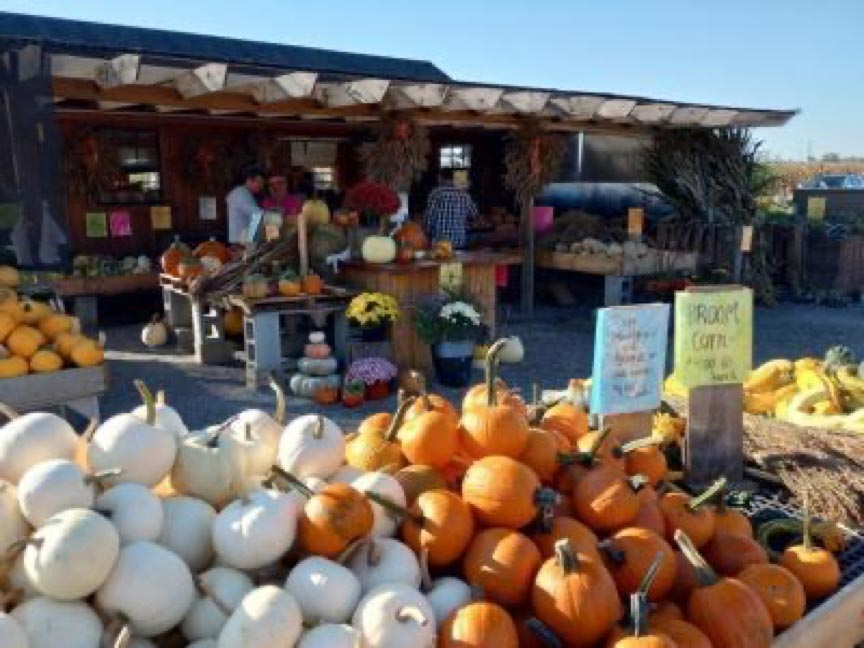
Photo from Lancaster Farming
The Business Behind the Farm Visit
https://modernfarmer.com/2024/03/the-business-behind-the-farm-visit/
The story of a farm outside Portland, Oregon that began offering agritourism activities to survive and the restrictions they faced to be able to do it. Their story is a common one. The article explores several key issues such as a lack of a definition for agritourism, preserving farmland, zoning and land use, and local enforcement and control.
‘Farm Stand’ Could Sell Array of Goods
https://www.tuscolatoday.com/news/farm-stand-could-sell-array-of-goods/article_7aa0ef47-fc60-4e31-9d6d-ba82a1a22f77.html
A Michigan farmer presented his plans for a farm market and a range of agricultural products to his local township for their information and ultimate approval. The township board requested he meet with the zoning administrator to get his zoning questions answered and share the details of his plans and then present his proposal back to the township planning commission for their consideration.
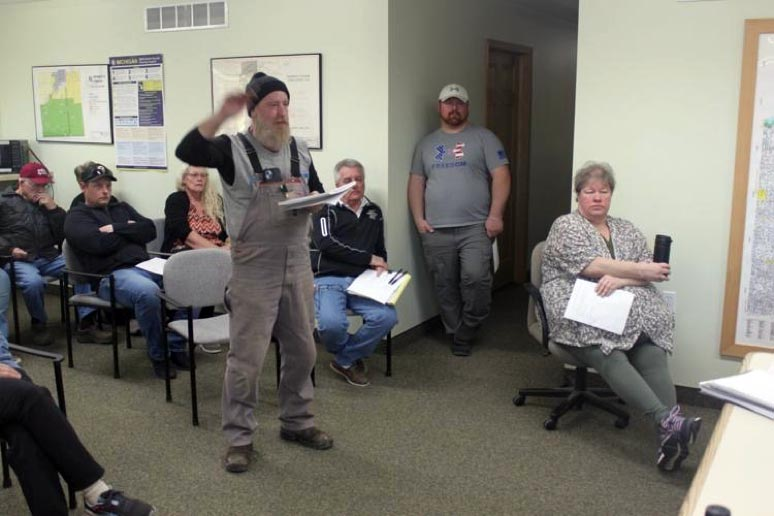
Photo from Tuscola Today
Guest column: Supporting agricultural tourism helps county’s economy
https://www.vcstar.com/story/opinion/2024/07/31/guest-column-supporting-agricultural-tourism-helps-countys-economy/74589407007/
This is a great article on the economic impact of agritourism on the local community. It is an op-ed piece that provides pro-agritourism information to help educate the community and local governments. Written for a specific county but could be adapted for your own county.
How Outdated Zoning Laws Are Stifling Agritourism Innovation
https://libertas.institute/limited-and-open-government/how-outdated-zoning-laws-are-stifling-agritourism-innovation/
This informative article examines the issues on agritourism and how some local zoning laws are inadequate for this growing industry. It describes agritourism and has advice for local governments.

Photo from Libertas Institute.
How to build a successful agritourism operation
https://www.farmprogress.com/farm-business/0317f-3663-slideshow
This article looks at the success of Jacob’s Farm, an agritourism destination in Michigan, and how their relationship with their local zoning board and officials contributed to their success. They share their story of the multi-year process with the township on zoning issues and obtaining the necessary permits. The article also offers agritourism pros and cons.
Letter to the Editor: Small farms should be supported, not hindered, by county code
https://www.thereflector.com/stories/letter-to-the-editor-small-farms-should-be-supported-not-hindered-by-county-code,331182
This letter to the editor focuses on a small farm’s desire to host weddings. If you are interested in hosting weddings, this is a must read as it presents their arguments for why it should be allowed.
Newfields residents battle over agritourism
https://www.aol.com/newfields-residents-battle-over-agritourism-035900868.html
In Newfields, a family farm’s popularity puts it at odds with its neighbors
https://www.nhpr.org/nh-news/2024-12-09/vernon-family-farm-newfields-new-hampshire-agritourism-neighbors-lawsuit
These two newspaper articles show how confrontational things can become between an agritourism farm and its neighbors. It also shows how local government is put in the middle of resolving the issues while striving to be fair to both sides. The litigation and debate over the farm’s events have polarized many of the residents.
Wedding venue sues Florida neighbors over noise complaints while claiming state agritourism protection
https://www.tampabay28.com/news/local-news/i-team-investigates/wedding-venue-sues-florida-neighbors-over-noise-complaints-while-claiming-state-agritourism-protection
A state law designed to protect Florida farmers is at the center of a growing dispute where residents say a wedding venue is disrupting their lives. Some of those neighbors say they are now facing lawsuits for speaking up. This story illustrates the frustrations between a farm and its neighbors over their agritourism events.
AGRITOURISM ZONING CASES
Following are some interesting stories on agritourism zoning that made headlines across the U.S. Please note: Each state has their own set of RTF laws and legal principles as mentioned in these cases. They may not apply to farms in Michigan.
County redefines ‘farm stand,’ what can be sold in one
https://www.dailyrepublic.com/news/county-redefines-farm-stand-what-can-be-sold-in-one/article_2b4f47b2-d2b3-11ef-826e-bf095606e964.html
A California county Board of Supervisors adopted an ordinance intended to simplify what it takes to operate a farm stand in Solano County. The easy part of the day’s action was changing the name from road stands to farm stands. Prohibiting the sale of alcohol – even unopened bottles of wine and other products made in the county – also was clear due to the state-involved regulations. What followed was an often-convoluted discussion on what products would be allowed, where they come from, what percentage of the goods have to be ag-related and/or on-site or locally produced and other similar details. In the end, the staff-recommended ordinance was passed on a 4-1 vote.
Farmers Concerned by Rules Controlling Events
https://www.jerseyshoreonline.com/howell/farmers-concerned-by-rules-controlling-events/
Township zoning officials met with local farmers to discuss new proposed rules that would regulate special events, such as birthday parties, weddings, and anniversary parties, being held at farms. The purpose is to provide a framework for conducting events. Farmers would submit details about the event and pay $85 for a special event permit. The event would be limited in size to 30 guests, farmers noting the impracticality of limiting guests at showers and birthday parties. For events over 30 people, farmers would need to submit site plans for approval.
The township is also focusing on farm markets to better align them with farming activities. The proposed ordinance would require at least 51% of goods sold at the market be grown by the farm. The proposed rules would also set boundaries to prevent the transformation of farm markets into unrelated commercial ventures.
New agritourism rules are proposed in Skagit County. Here’s what to know
https://www.cascadiadaily.com/2026/mar/30/new-agritourism-rules-are-proposed-in-skagit-county-heres-what-to-know/
Efforts to hammer out more precise “agritourism” rules in the county stretch back several years, and debate has been heated. Traditional farmers who want to protect agricultural land have found themselves at odds with smaller-scale growers who say they depend on the additional revenue to survive. Even the definition of agritourism has been difficult to pin down. County Planning Commission deliberations on the issue included a back-and-forth on whether to recommend that agritourism must have a “connection” to farming or a “direct connection” (they landed on direct). The proposed code specifies that “agritourism allows for educational and experiential activities that are related to, and supportive of, agricultural production. The county’s stated goal for the new regulations is to allow farmers to supplement their income with tourism on their land, and at the same time protect farmland and minimize impacts on neighbors.
The draft code splits agritourism into three categories, defined by the number of guests attending and how often public events will take place. The lowest impact type, with a maximum of 50 guests per day and 10 days per year, would be permitted outright as long as operators sign an agreement with the county to comply with the regulations.
Farmers wanting to start larger operations would go through a longer process. To host events up to 35 days a year with a maximum of 100 guests, they would have to apply for an administrative special use permit, around $3,000. Larger events would require a special use permit.
Agritourism operations in the first two categories would face some additional restrictions, including a requirement that farming on the property generated an average gross income of $500 or more per acre per year for the previous three years.
New Zoning Law Requires Farmers to be on State/County Road, Have at Least Seven Acres, and Farm 51 Percent of Land to Qualify for Agritourism Activities
https://rcbizjournal.com/2024/06/26/clarkstown-passes-agritourism-law-that-will-tie-hands-of-growers-who-dont-meet-strict-criteria/
A farmer no longer qualifies to have her two-acre vineyard. The City of Clarkson amended their urban agritourism code to be more limiting – the site must be at least seven acres, situated on a state or county road, and 51 percent of the land must be used for agriculture. The law also reduced the buffer around agritourism activities like food trucks and entertaining from 300 feet to 200 feet. And it reduced the requirement of having 300 feet of frontage on a state or county road to 100 feet. Farmers or growers who add agritourism to their operations will need a special permit from the Town’s Planning Board. Those who do not meet the new criteria will need to apply for an area variance from the Town’s Zoning Board of Appeals.
Oregon Gov. Kotek signs bill loosening restrictions for farm stands, propping up ‘agritourism’
https://www.yahoo.com/news/articles/oregon-gov-kotek-signs-bill-233034876.html
Oregon Gov. Tina Kotek signed a bill loosening regulations for “agritourism” operations across the state. The bipartisan bill removes a 25% revenue limit for non-farm sources, like ticket sales and concessions, and allows the creation of larger “farm stores” up to 10,000 square feet. The legislation comes after backlash last summer when the Department of Land Conservation and Development proposed changes to rules governing what farm stands could sell. The governor stopped the process after several family farms took to social media warning that these proposed changes could have detrimental consequences.
Vernon Farm countersues, claims neighbors launched ‘vicious attacks’
https://www.seacoastonline.com/story/news/local/2026/01/23/vernon-farm-countersues-claims-neighbors-launched-vicious-attacks/88316204007/?gnt-cfr=1&gca-cat=p&gca-uir=true&gca-epti=undefined&gca-ft=0&gca-ds=sophi
A years-long dispute over Vernon Family Farm’s agritourism operation returned to court when a judge heard arguments on a motion to dismiss the Vernons’ counterclaims against neighbors they say have been “viciously attacking” their way of life. Neighbors took the farm to court seeking to stop their agritourism events (concerts, food, alcohol sales) due to noise, traffic, police presence, and diminishing quality of life. The ruling found the neighbors missed the deadline to appeal the farm’s 2022 site plan approval. While most claims were dismissed, a claim regarding noise violations may proceed, as the judge ruled agritourism is not exempt from local noise ordinances.
The 33-acre farm was purchased by the Vernons to grow produce and raise livestock. They submitted a site plan in 2022 to add agritourism events, which was approved. Despite the win, the farm has reported spending over $100,000 in legal fees to defend against the lawsuit. As of January 2026, the legal dispute continues, with the farm filing a countersuit alleging the neighbors launched “vicious attacks”. The case highlights ongoing tensions between local agriculture and residential development.
Who are you kidding? ‘Agri-tourism’ resorts on the Sound are a boondoggle for developers
https://riverheadlocal.com/2024/06/08/who-are-you-kidding-agri-tourism-resorts-on-the-sound-are-a-boondoggle-for-developers/
Riverhead’s comp plan approved, despite public objections — and board’s dire warnings about looming fiscal trouble not addressed by plan
https://riverheadlocal.com/2024/09/04/riverheads-comp-plan-approved-despite-public-objections-and-boards-dire-warnings-about-looming-fiscal-trouble-not-addressed-by-plan/
Citizens on the Sound are against proposed rules that would allow a 250-room luxury resort to be built on a farm with minimal agricultural activity near it. Residents feel this is helping real estate developers, not farmers. There are also concerns about increased traffic, farmland paved for parking lots, increased sewage and greywater. The city voted to approve a revised comp plan to not include the controversial recommendation but warned that the community would feel the effect of not having this key property tax revenue.
RESOURCES AND SUPPORT
A Citizen’s Guide to Planning & Zoning in NW Michigan.
https://mrwa.org/wp-content/uploads/repository/planning-zoning.pdf
This basic resource does an excellent job explaining the zoning process from A to Z. It describes the Master Plan, zoning ordinances, the key players in zoning issues, and how to get involved. A must read for those wanting to be better informed on the nuances of zoning and the zoning process.
Agricultural Tourism Local Zoning Guidebook and Model Zoning Ordinance Provisions
https://www.networksnorthwest.org/userfiles/filemanager/3159/#:~:text=Michigan’s%20Right%20to%20Farm%20Program,act%20is%20no%20longer%20applicable
This resource provides information about zoning for agriculture, especially for agritourism. If you are working with your local district on developing zoning ordinances or planning to propose some, this resource will give you background information, key definitions, and suggested language.
Find a Township
https://michigantownships.org/find-a%20township/
This resource will help you find a map or contact information for any township in Michigan. Data available on each township include elected officials, address and contact information, MTA survey and U.S. Census data. Information on elected officials is updated daily. Contact your local planning department to learn about state zoning codes that address things such as buildings, new construction, and signage.
The Michigan Association of Planning
https://www.planningmi.org/
The Michigan Association of Planning (MAP) is a 501c3 organization, established in 1945, and is dedicated to urban and regional planning. Today, MAP has a membership of over 4,000; seventy percent are citizens appointed to planning commissions and zoning boards of appeal. The Michigan Association of Planning is, operationally and organizationally, the largest state chapter of the American Planning Association (APA).
Michigan Department of Agriculture and Rural Development
Michigan Right to Farm Act: Act 93 of 1981
https://www.legislature.mi.gov/documents/mcl/pdf/mcl-Act-93-of-1981.pdf
An act to define certain farm uses, operations, practices, and products; to provide certain disclosures; to provide for circumstances under which a farm shall not be found to be a public or private nuisance; to provide for certain powers and duties for certain state agencies and departments; and to provide for certain remedies for certain persons.
Michigan Department of Agriculture and Rural Development
Michigan Right to Farm Act and GAAMPS webpage
https://www.michigan.gov/en/mdard/environment/rtf
We recommend you bookmark this key landing page, especially since Michigan’s GAAMPS are reviewed for updates annually.
DISCLAIMERS
The information provided in this online module is for informational and educational purposes only. It is not intended as professional advice and should not be relied upon as such. While efforts have been made to ensure accurate and up-to-date information, we cannot guarantee its reliability or completeness. Readers are encouraged to do their own research and consult with qualified professionals before making any decisions based on the content presented.
References to commercial products, trade names, or suppliers are made with the understanding that no endorsement is implied and that no discrimination against other products or suppliers is intended.
The opinions and advice expressed are solely those of the authors and may not reflect those of the Michigan Agritourism Association, its board of directors, or members. Michigan Agritourism and the authors are not liable for any direct or indirect damage resulting from the use of the information shared with you. Your use of this toolkit indicates your acceptance of these terms.
REFERENCES
Becerra, G. (2024, July 31). Guest column: Supporting agricultural tourism helps county’s economy. Ventura County Star. https://www.vcstar.com/story/opinion/2024/07/31/guest-column-supporting-agricultural-tourism-helps-countys-economy/74589407007/
Beck, L. (2024, March 12). The business behind the farm visit. Modern Farmer. https://modernfarmer.com/2024/03/the-business-behind-the-farm-visit/
Bloom, C. & Bloom Sluggett Morgan, PC. (2014). The Michigan Right to Farm Act renders many zoning regulations invalid. https://www.bloomsluggett.com/municipal_law/PDF/Municipal_Articles/Article_Right_to_
Building permit exemption | Michigan Farm Bureau Family of companies. (n.d.). Michigan Farm Bureau Family of Companies. https://www.michfb.com/agriculture/farming-resources/land-use-regulation/building-permit-exemption
Caraway, R. (2024, August 28). Planning Commission approves rules for agritourism businesses. Noozhawk. https://www.noozhawk.com/planning-commission-approves-rules-for-agritourism-businesses/
Claus, L. (2025, May 29). Farming First: Skagit Valley’s working landscape and the agritourism debate. Cascadia Daily News – Bellingham, WA Local News, Sports, Events. https://www.cascadiadaily.com/2025/may/29/farming-first-skagit-valleys-working-landscape-and-the-agritourism-debate/
Clougherty, B. S. (2024, November 27). Panel: Not every on-farm attraction can be seen as true ‘agritourism.’ American Farm Publications -. https://americanfarm.com/articles/delmarvafarmer/panel-not-every-on-farm-attraction-can-be-seen-as-true-agritourism/
CMS Specialists. (2025, April 16). What you need to know about zoning laws and building codes in Michigan. CMS. https://cmsmaterialsolutions.com/blogs/news/what-you-need-to-know-about-zoning-laws-and-building-codes-in-michigan?_pos=1&_sid=b8d796dd1&_ss=r
Counties hurdle zoning challenges for agritourism. (2024, September 22). National Association of Counties. https://www.naco.org/news/counties-hurdle-zoning-challenges-agritourism
Cousineau, M. (2024, June 1). Newfields residents battle over agritourism. AOL. https://www.aol.com/newfields-residents-battle-over-agritourism-035900868.html
Dippold, B. (2025, November 26). Zoning violation sparks appeal for family-owned farm market in Butler County. Journal-news. https://www.journal-news.com/business/zoning-violation-sparks-appeal-for-family-owned-farm-market-in-butler-county/U72MIZ7WSJEWLAEDVKJQ6XEHJM/
The Farming Insider. (2025, January 11). Zoning compliance tips for modern farmers. https://thefarminginsider.com/zoning-compliance-tips-for-farmers/
Fery, M., & Comerford, A. (2024). Adding agritourism: Developing your plan and working with your county. https://extension.oregonstate.edu/community-vitality/agritourism/adding-agritourism-developing-your-plan-working-your-county
Feusner, M. (2025, January 22.). Washington farmers want agritourism law reforms. Newport Miner. https://www.pendoreillerivervalley.com/article/2206,washington-farmers-want-agritourism-law-reforms
Gilchrist, T. (2026, March 25). ‘Farm stand’ could sell array of goods. The Advertiser. https://www.tuscolatoday.com/news/farm-stand-could-sell-array-of-goods/article_7aa0ef47-fc60-4e31-9d6d-ba82a1a22f77.html
Greene PC tackles Agritourism Event Regs in latest work session. (2025, April 17). NewsBreak. https://www.newsbreak.com/greene-journal-1686973/3966329059341-greene-pc-tackles-agritourism-event-regs-in-latest-work-session
Jameison, R. (2026, January 27). What proper process requires: when the agritourism regulation returns – Royal Examiner. Royal Examiner – https://royalexaminer.com/what-proper-process-requires-when-the-agritourism-regulation-returns/
Johnson, M. (2025, April 23). Boulder County Commissioners approve mobile farm stands. Left Hand Valley Courier. https://www.lhvc.com/story/2025/04/23/news/boulder-county-commissioners-approve-mobile-farm-stands/10475.html
Kiel, J. (Ed.). (2025, March 21). How to build a successful agritourism operation. MichiganFarmer @ FarmProgress.com. https://www.farmprogress.com/farm-business/0317f-3663-slideshow
Kiser, U. (2025, July 3). Stafford County orders farm stand shut down, citing zoning rules. Potomac Local News. https://www.potomaclocal.com/2025/07/03/stafford-county-orders-farm-stand-shut-down-citing-zoning-rules/
Kroiss, K. (2025, March 12). Farm store and coffee stand near Wilsonville close due to county zoning violations. WilsonvilleSpokesman.com. https://www.wilsonvillespokesman.com/news/local/farm-store-and-coffee-stand-near-wilsonville-close-due-to-county-zoning-violations/article_f2e78d0c-ff9f-11ef-9afa-ff32c0abf2ef.html
Lefever, D. (2024, December 16). Ag Leaders Voice Support for Lancaster County Farm Market Fighting Township Ordinance. Lancaster Farming. https://www.lancasterfarming.com/farming-news/ag-business/ag-leaders-voice-support-for-lancaster-county-farm-market-targeted-by-township/article_5fc1ceae-bbc3-11ef-ad40-bb968a555b6c.html
Letter to the Editor: Small farms should be supported, not hindered, by county code. (2023, December 18). The Reflector. https://www.thereflector.com/stories/letter-to-the-editor-small-farms-should-be-supported-not-hindered-by-county-code,331182?
Lewis, A. (2024, August 13). Hubbard, town staff defend developer’s involvement in agri-tourism zoning code proposal – RiverheadLOCAL. RiverheadLOCAL. https://riverheadlocal.com/2024/02/02/hubbard-town-staff-defend-developers-involvement-in-agri-tourism-zoning-code-proposal/
Libertas Institute. (2025, March 26). How outdated zoning laws are stifling agritourism innovation – Libertas Institute. Libertas Institute – Changing hearts, minds, and laws to create a freer future. https://libertas.institute/limited-and-open-government/how-outdated-zoning-laws-are-stifling-agritourism-innovation/
Michigan Agritourism Tourism Advisory Commission. (2007). Michigan Agricultural Tourism Local Zoning Guidebook and Model Zoning Ordinance Provisions. https://www.networksnorthwest.org/userfiles/filemanager/3159/#:~:text=Michigan’s%20Right%20to%20Farm%20Program,act%20is%20no%20longer%20applicable
Neumann, B. & Michigan State University Extension. (2020). Introduction to zoning and taxation [Book]. In Beginning Farmers DEMaND series. https://www.canr.msu.edu/farm_management/uploads/files/E3422_Introduction_to_Zoning_Taxation_AA.pdf
Neumann, B. & Michigan State University Extension. (2023, April 11). Right to Farm Act can preempt local regulation authority, but not all local regulations. Government. https://www.canr.msu.edu/news/right_to_farm_act_can_preempt_local_regulation_authority_but_not_all_local#:~:text=October%202013)).-
Northwest Michigan Council of Governments & NWMCOG Planners Review and Advisory Committee. (2000). A citizen’s guide to planning & zoning in Northwest Michigan. In New Designs for Growth. https://mrwa.org/wp-content/uploads/repository/planning-zoning.pdf
Pashow, L. (2024, June 25). What is Agritourism? Starting an Agritourism Operation (#1). Agritourism Fact Sheets. Cornell Cooperative Extension. https://cornell.app.box.com/s/56rvu86ctbepnezwv1vbobm8wjdpoi5v/file/1571219104279
Pereira, R. (2025, May 16). Owners of Lewis Farm prepare to bring back agritourism after long dispute with city of Concord. Concord Monitor. https://www.concordmonitor.com/lewis-farm-agritourism-farm-to-table-dinner-festival-news-bow-concord-monitor-60704135
Post, P. (2018, June 18). Thinking of a farm project? Know your zoning. Lancaster Farming. https://www.lancasterfarming.com/farming-news/ag-business/thinking-of-a-farm-project-know-your-zoning/article_126eacde-d3bb-5cf3-8c8d-99d506e2542a.html Understanding zoning regulations can save valuable time and money before proceeding with farm-based ventures.
Rantanen, M. (2025, June 27). Farm market in Steveston closed for remainder of season. Richmond News. https://www.richmond-news.com/local-news/farm-market-steveston-bc-closed-remainder-of-season-10876017
Richardson, O. (2024, December 9). In Newfields, a family farm’s popularity puts it at odds with its neighbors. New Hampshire Public Radio. https://www.nhpr.org/nh-news/2024-12-09/vernon-family-farm-newfields-new-hampshire-agritourism-neighbors-lawsuit
Riverhead News Review. (2026, March 21). Editorial: The future of farming in Riverhead is being tested. https://riverheadnewsreview.timesreview.com/2026/03/132560/editorial-the-future-of-farming-in-riverhead-is-being-tested/
Safuto, V. (2021, December 28). Agricultural zoning lets landowners do much more than grow crops. Suncoast News. https://www.suncoastnews.com/news/agricultural-zoning-lets-landowners-do-much-more-than-grow-crops/article_ed5c62ae-67fe-11ec-9201-b333692ab974.html
Schmidt, C., Entsminger, J.S., Cornelisse, S. and Schweichler, J. (2025) “Insights on Agritourism Among U.S. Producers: Evidence from the 2024 National Agritourism Producer Survey.” Data Brief 2025-1. Northeast Regional Center for Rural Development.
Shakespear, B. (2024, August 23). Farm stand eatery allowed to move forward. paysonroundup.com. https://www.paysonroundup.com/news/business/farm-stand-eatery-allowed-to-move-forward/article_fac06880-5f65-11ef-8d38-bbc67a3f50db.html
Stacom, D. (2026, March 3). Historic CT farm and vineyard gets OK to expand. ‘Agritourism’ is key, official says. Hartford Courant. https://www.courant.com/2026/03/03/historic-ct-farm-and-vineyard-gets-ok-to-expand-agritourism-is-key-official-says/
Stolzenburg, N. & Onondaga County Planning. (2025, March). Agritourism: Land use and zoning practices. https://onondagacountyplanningfederation.com/wp-content/uploads/2025/08/F_Agritourism_Combined.pdf
Taylor, A. (2026, January 29). Taylor: The power of agritourism. LoudounNow.com. https://www.loudounnow.com/opinion/taylor-the-power-of-agritourism/article_3fb301d1-7acb-472d-8a41-621b583b4733.html
University of Vermont Extension. (2019). [Book]. A Guide to Successful Agritourism Enterprises. https://www.uvm.edu/d10-files/documents/2024-09/2019_BestPracticesAgritourism-FINALDRAFT-lores.pdf
Walser, A. (2026, April 8). Tampa Bay 28 (WFTS). Tampa Bay 28 (WFTS). https://www.tampabay28.com/news/local-news/i-team-investigates/wedding-venue-sues-florida-neighbors-over-noise-complaints-while-claiming-state-agritourism-protection
What sorts of local regulations are preempted by the Right to Farm Act (RTFA) – Planning. (2018, June 28). Planning. https://www.canr.msu.edu/resources/who_is_protected_from_zoning_regulation_under_the_right_to_farm_act_rtfa
Wunsch, J. (2024, July 1). Opinion: AG Advisory Committee will lead to better farming opportunities. Old Mission Gazette. https://www.oldmission.net/2024/06/opinion-more-agritourism-please/
References for the Case Examples
Civiletti, D. (2024, June 8). Opinion | Who are you kidding? ‘Agri-tourism’ resorts on the Sound are a boondoggle for developers – RiverheadLOCAL. RiverheadLOCAL. https://riverheadlocal.com/2024/06/08/who-are-you-kidding-agri-tourism-resorts-on-the-sound-are-a-boondoggle-for-developers/
Claus, L. (2025, May 29). Farming First: Skagit Valley’s working landscape and the agritourism debate. Cascadia Daily News – Bellingham, WA Local News, Sports, Events. https://www.cascadiadaily.com/2025/may/29/farming-first-skagit-valleys-working-landscape-and-the-agritourism-debate/
Cousineau, M. (2024, June 1). Newfields residents battle over agritourism. AOL. https://www.aol.com/newfields-residents-battle-over-agritourism-035900868.html
Faughnan, S. (2024, March 8). Farmers concerned by rules controlling events. Jersey Shore Online. https://www.jerseyshoreonline.com/howell/farmers-concerned-by-rules-controlling-events/
Gates, S. (2026, January 27). Agritourism code proposal gets recommendation from Skagit Planning Commission. Cascadia Daily News – Bellingham, WA Local News, Sports, Events. https://www.cascadiadaily.com/2026/jan/27/agritourism-code-proposal-gets-recommendation-from-skagit-planning-commission/
Gates, S. (2026b, March 27). New agritourism rules are proposed in Skagit County. Here’s what to know. Cascadia Daily News – Bellingham, WA Local News, Sports, Events. https://www.cascadiadaily.com/2026/mar/30/new-agritourism-rules-are-proposed-in-skagit-county-heres-what-to-know/
Hansen, T. (2025, January 15). County redefines “farm stand,” What can be sold in one. Daily Republic. https://www.dailyrepublic.com/news/county-redefines-farm-stand-what-can-be-sold-in-one/article_2b4f47b2-d2b3-11ef-826e-bf095606e964.html
Herald, M. (2024, August 22). Vernon Family Farm asks public for help in its fight against neighbors’ lawsuit threat – NH Business Review. NH Business Review. https://www.nhbr.com/vernon-family-farm-asks-public-for-help-in-its-fight-against-neighbors-lawsuit-threat/
Hisham, A. (2024, June 28). Neighbors clash over Vernon Family Farm agritourism events in Newfields. Portsmouth Herald.
Martinez, C. (2025, December 25). Skagit County Board of Commissioners to hold public hearing on agritourism. goSkagit. https://www.goskagit.com/skagit-county-board-of-commissioners-to-hold-public-hearing-on-agritourism/article_fe5bc942-ded0-4fb8-a4fc-5851e75435ca.html
Ng, B. (2026, January 24). Vernon Farm countersues, claims neighbors launched ‘vicious attacks.’ Portsmouth Herald. https://www.seacoastonline.com/story/news/local/2026/01/23/vernon-farm-countersues-claims-neighbors-launched-vicious-attacks/88316204007/?gnt-cfr=1&gca-cat=p&gca-uir=true&gca-epti=undefined&gca-ft=0&gca-ds=sophi
Nickelsburg, M. (2023, October 20). As fall festivities draw crowds to Skagit Valley farms, rules to limit agritourism sow division. NPR Network. https://www.kuow.org/stories/as-fall-festivities-draw-crowds-to-skagit-valley-farms-rules-to-limit-agritourism-sow-division
Richardson, O. (2024, December 9). In Newfields, a family farm’s popularity puts it at odds with its neighbors. New Hampshire Public Radio. https://www.nhpr.org/nh-news/2024-12-09/vernon-family-farm-newfields-new-hampshire-agritourism-neighbors-lawsuit
Shults, T. (2026, April 9). Oregon Gov. Kotek signs bill loosening restrictions for farm stands, propping up “agritourism.” Yahoo News. https://www.yahoo.com/news/articles/oregon-gov-kotek-signs-bill-233034876.html
Simonelli, I. S. (2024, March 26). Skagit County searches for common ground in contentious agritourism debate. Cascadia Daily News – Bellingham, WA Local News, Sports, Events. https://www.cascadiadaily.com/2024/mar/26/skagit-county-searches-for-common-ground-in-contentious-agritourism-debate/
Traster, T. (2024, July 7). Clarkstown Passes Agritourism Law That Will Tie Hands of Growers Who Don’t Meet Strict Criteria. Rockland County Business Journal. https://rcbizjournal.com/2024/06/26/clarkstown-passes-agritourism-law-that-will-tie-hands-of-growers-who-dont-meet-strict-criteria/
Additional Reading on the Skagit Valley Case
This colorful case is interesting as it really examines the issues of agritourism, the rights of farmers, the wishes of the community, and the roles and decisions of local government. At the time of this writing, their new agritourism rules are yet to be finalized and approved.
As fall festivities draw crowds to Skagit Valley farms, rules to limit agritourism sow division (October 2023)
https://www.kuow.org/stories/as-fall-festivities-draw-crowds-to-skagit-valley-farms-rules-to-limit-agritourism-sow-division
Public hearing held on Skagit County agritourism moratorium, still time to comment (March 2024)
https://www.goskagit.com/public-hearing-held-on-skagit-county-agritourism-moratorium-still-time-to-comment/article_3ef34020-eae2-11ee-8808-df67659cd8a1.html
Skagit County searches for common ground in contentious agritourism debate (March 2024)
https://www.cascadiadaily.com/2024/mar/26/skagit-county-searches-for-common-ground-in-contentious-agritourism-debate/
Farming First: Skagit Valley’s working landscape and the agritourism debate (May 2025)
https://www.cascadiadaily.com/2025/may/29/farming-first-skagit-valleys-working-landscape-and-the-agritourism-debate/
Skagit County Board of Commissioners to hold public hearing on agritourism (December 2025)
https://www.goskagit.com/skagit-county-board-of-commissioners-to-hold-public-hearing-on-agritourism/article_fe5bc942-ded0-4fb8-a4fc-5851e75435ca.html
Agritourism code proposal gets recommendation from Skagit Planning Commission (January 2026)
https://www.cascadiadaily.com/2026/jan/27/agritourism-code-proposal-gets-recommendation-from-skagit-planning-commission/
Additional Reading on the Vernon Family Farm Case
This case is an example of unyielding disagreements between farmers and neighbors. Neighbors say agritourism events have increased significantly over the past year and are disrupting their neighborhood. Three households abutting the farm filed a civil action in Rockingham Superior Court as the town did not address what they see as violations of the town ordinance. The farmers countersued. To date, the case is unresolved.
Newfields residents battle over agritourism (May 2024)
https://www.aol.com/newfields-residents-battle-over-agritourism-035900868.html
Neighbors clash over Vernon Family Farm agritourism events in Newfields (June 2024)
https://www.seacoastonline.com/story/news/local/2024/06/28/vernon-family-farm-neighbors-complaints-agritourism-events-newfields-nh/73910551007/
Vernon Family Farm asks public for help in its fight against neighbors’ lawsuit threat (August 2024)
https://www.nhbr.com/vernon-family-farm-asks-public-for-help-in-its-fight-against-neighbors-lawsuit-threat/
In Newfields, a family farm’s popularity puts it at odds with its neighbors (December 2024)
https://www.nhpr.org/nh-news/2024-12-09/vernon-family-farm-newfields-new-hampshire-agritourism-neighbors-lawsuit